



Celebrity personal archives are becoming highly valuable in 2026 because collectors, museums, and fans now treat iconic stage outfits and performance pieces as cultural assets instead of disposable costumes. This shift is reshaping how the industry preserves, protects, and monetizes celebrity history.
Celebrity personal archives refer to the curated collection of clothing, props, and artifacts tied to a public figure’s career, often preserved for historical, cultural, or commercial value. These archives function like private museums that document an artist’s evolution.
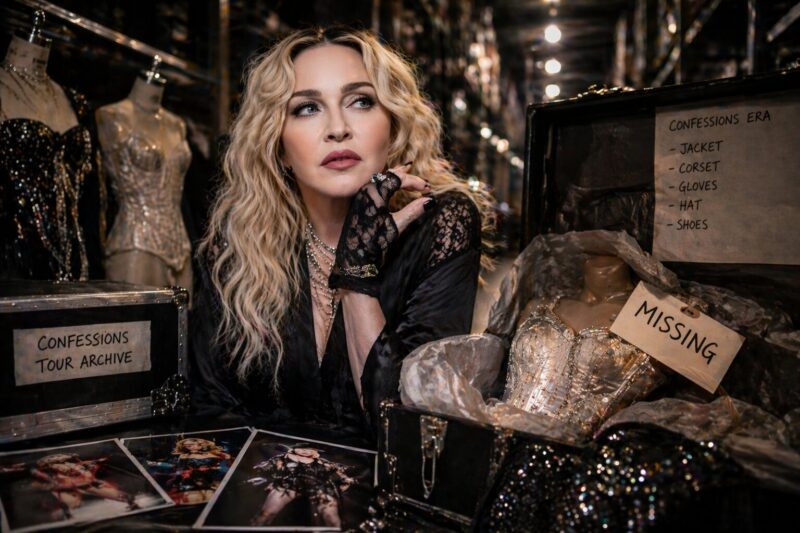
The conversation intensified after Madonna revealed that key “Confessions” era stage pieces went missing following her Coachella Weekend 1 appearance. The incident turned what would normally be a backstage issue into a wider cultural discussion about ownership, preservation, and the value of performance history.
What Are Celebrity Personal Archives?
Celebrity personal archives are curated collections of items tied to a performer’s career history. These include stage outfits, props, handwritten notes, and performance memorabilia.
Unlike traditional fashion collections, these archives are not static. They evolve as careers progress and are often revisited for exhibitions, documentaries, or anniversary projects.
In many cases, these items become symbolic representations of cultural moments. A single outfit can represent an entire era of music, performance, or identity.
As a result, preservation has become as important as creation.
Why Are Celebrity Personal Archives Becoming So Valuable?
The value of celebrity archives has increased because audiences now see entertainment history as cultural heritage. Iconic outfits are no longer viewed as costumes—they are treated as artifacts.
The rise of digital media has amplified this shift. Once a performance goes viral, its visual elements become permanently embedded in online culture.
This creates long-term demand for physical preservation. Fans, collectors, and institutions all compete for access to original pieces.
There is also a financial dimension. Auction houses and museums increasingly treat celebrity fashion as investment-grade cultural property.
Madonna and the “Confessions” Era Missing Outfits
The recent incident involving Madonna brought this issue into mainstream discussion.
After her surprise Coachella performance, she revealed that several key archival pieces from her “Confessions” era—including a vintage jacket and corset—were missing.
The situation quickly spread across cultural media, turning into a broader conversation about the security of celebrity archives.
What makes this notable is not just the loss itself, but the reaction. Fans and industry professionals treated the missing items as irreplaceable cultural artifacts rather than personal wardrobe pieces.
Why Do Missing Stage Outfits Cause Such a Cultural Reaction?
The reaction to missing celebrity outfits reflects how deeply performance history is tied to identity. Growing up in the spotlight intensifies this connection, as seen in Nia Sioux on Growing Up in the Spotlight and “Untamed”, where public identity and personal expression are constantly shaped by audience perception.
Stage costumes are not just clothing. They represent specific eras, performances, and cultural shifts. Losing them feels similar to losing a piece of documented history.
This is especially true for artists with long careers. Each outfit becomes part of a visual timeline that audiences associate with memory and meaning.
In this context, missing items trigger concern not only about ownership, but about cultural preservation.
How “Living Museums” Are Changing Celebrity Culture
In 2026, many celebrities are no longer simply storing their belongings—they are building structured personal archives that function like museums.
These collections are carefully cataloged, preserved, and sometimes loaned to exhibitions or fashion retrospectives.
The idea of curating presentation extends beyond archives into everyday styling practices, where even simple wardrobe choices can be elevated through intentional upgrades, as explored in 5 Ways to Upgrade Your Outfit.
The idea of a “living museum” reflects a shift in how fame operates. Careers are now documented in real time, with an awareness that future audiences will study them.
This approach also increases the pressure to secure and manage items properly, as their cultural and financial value continues to rise.
What Drives the Legal and PR Frenzy Around Lost Artifacts?
When items from celebrity archives go missing, the response often extends beyond personal concern into legal and public relations territory.
Contracts may define ownership between designers, stylists, production teams, and artists. This makes retrieval complex when items are misplaced or unaccounted for.
Public perception also plays a role. Fans view these items as shared cultural property, increasing pressure for resolution and transparency.
Media coverage amplifies the situation further, turning internal disputes into public conversations about cultural preservation.
How Coachella Culture Amplifies Fashion History
Events like Coachella Valley Music and Arts Festival play a major role in elevating celebrity fashion into cultural history.
Festival performances are heavily documented, shared, and analyzed in real time. This turns outfits into instantly recognizable symbols.
Once a look circulates widely, it becomes part of digital fashion history. Losing such items feels like losing a piece of a widely shared cultural moment.
This is why Coachella appearances often become key reference points in celebrity archives.
What This Trend Says About Culture in 2026
The rise of celebrity personal archives reflects a broader cultural shift toward preservation and documentation.
Audiences are no longer just consuming entertainment—they are actively archiving it through screenshots, clips, and discussions.
This creates a parallel system of memory between celebrities and audiences. Both contribute to preserving cultural moments, even if in different ways.
It also signals a growing awareness that cultural artifacts hold long-term value, both emotionally and financially.
For readers exploring how cultural memory shapes modern media, this analysis of evolving entertainment preservation provides further context: /related-article-slug
Conclusion
Celebrity personal archives are becoming central to entertainment culture in 2026 because audiences now treat performance history as cultural heritage. The missing “Confessions” era pieces linked to Madonna highlight how even individual outfits can hold significant symbolic value.
As fame becomes increasingly documented and preserved, the line between fashion, history, and cultural artifact continues to blur. What celebrities wear today is no longer temporary—it is part of a growing historical archive.
Frequently Asked Questions
What are celebrity personal archives?
Celebrity personal archives are curated collections of outfits, props, and memorabilia that document a public figure’s career and cultural impact.
Why are Madonna’s missing outfits important?
The missing “Confessions” era pieces are considered culturally significant because they represent a defining period in her career and music history.
Why are celebrity stage outfits becoming so valuable?
They are valuable because they represent cultural moments, are often one-of-a-kind, and are increasingly seen as historical artifacts rather than costumes.
External Sources: